Jul 19, 2026Buying Guides
Why Two Yoga Leggings in the Same Size Fit Differently
An M label does not define fit. Learn how pattern measurements, fabric stretch, rise, waistband, gusset and grading shape yoga leggings.
Why Two Yoga Leggings in the Same Size Fit Differently
Two pairs of leggings can both carry an M label and still feel completely different. One stays secure without pressure; another rolls at the waist, pulls at the crotch or slides during movement. This is not necessarily a labeling error. Size names are brand-defined, while fit is created by measurements, pattern shape, material behavior and construction.
For B2B buyers, understanding these variables is essential when comparing samples or developing a private-label size chart.
Size names are not universal measurements
S, M and L are convenient labels, but there is no single global M for activewear. Every brand determines its target body measurements, fit preference and grade rules.
A meaningful specification should include key points of measure such as:
- waist width or circumference;
- hip width;
- front rise;
- back rise;
- crotch depth;
- thigh width;
- knee width;
- inseam;
- leg opening;
- waistband height.
How these measurements are taken must also be defined. Small differences in measurement method can create confusing sample comments.
Fabric changes the effective fit
The same pattern cut in two fabrics may not fit the same way. Important variables include:
- stretch in each direction;
- force required to stretch;
- recovery after extension;
- thickness and bulk;
- surface friction;
- dimensional change after washing.
A soft, easily extensible fabric may feel more forgiving. A denser, higher-compression fabric may require pattern adjustment even at the same nominal composition.
Rise and crotch shape matter
Front rise, back rise and crotch depth influence how the garment sits through the torso and pelvis. Too little length or depth can cause pulling and discomfort. Too much can create excess fabric or instability.
The shape of the front and back crotch curves is as important as their measured length. Fit should therefore be judged on the body and in movement, not from a flat measurement table alone.
Waistband construction changes support
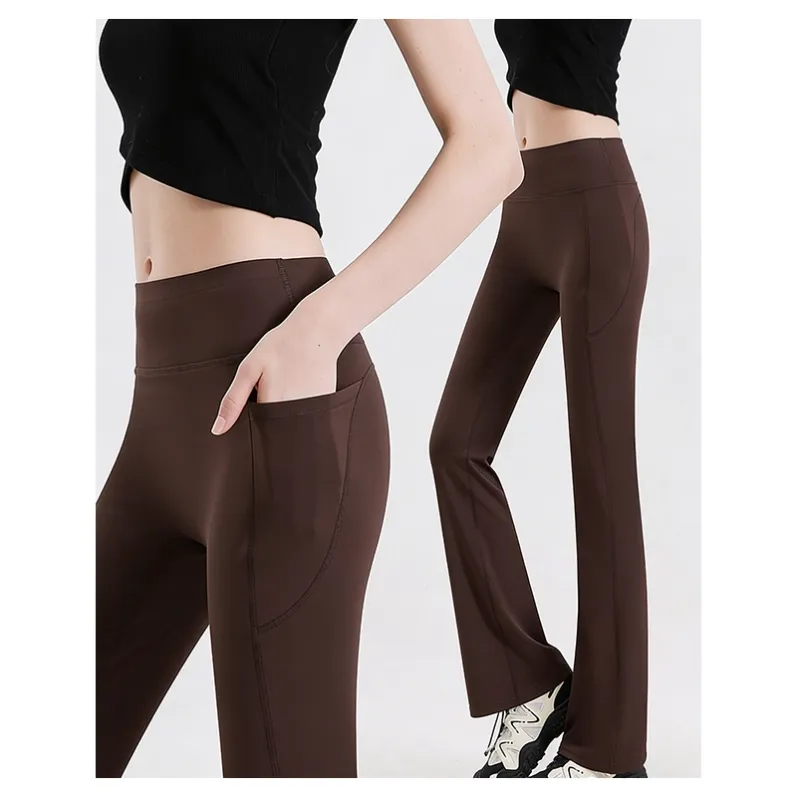
Waistband height, contour, seam placement, internal layers and elastic specification all affect fit. A waistband may look identical in a photograph but behave differently because its internal construction is different.
Common symptoms provide clues:
- rolling may indicate a mismatch among height, stiffness, body curve and compression;
- sliding may indicate insufficient grip, poor recovery or a fit imbalance;
- excessive pressure may indicate too much negative ease or an overly firm component;
- gaping may indicate contour or grading problems.
Gusset and seam placement affect mobility
A gusset can redistribute seams and support movement through the crotch area. Its shape, size and orientation must match the pattern and activity. It is not a universal cure for poor fit, but it can be a useful design element.
Seams also influence how tension travels through a garment. Panel lines that look attractive must still work with the body during flexion, extension and rotation.
Grading is more than adding the same amount everywhere
When a base size is approved, other sizes are created using grade rules. Bodies do not scale uniformly, so simply increasing every measurement by the same amount can distort fit.
For commercially important ranges, brands should review a size set or selected key sizes. This is particularly important when expanding into extended sizes or when the design uses strong compression.
A better sample review process
- Define the target customer and intended fit.
- Confirm the base-size body measurements.
- Record garment measurements and tolerances.
- Approve the fabric before finalizing fit.
- Conduct movement-based fit review.
- Record comments by measurement point and location.
- Review waistband, rise, gusset and hem separately.
- Confirm grade rules before bulk cutting.
The Geny Yoga perspective
At Geny Yoga, we treat fit as the interaction of pattern, fabric and construction. A size label is only the name of the result; it is not the engineering behind it.
If you are developing a private-label legging, contact Emma with your target market, reference size chart, desired compression and sample feedback. Clear inputs help Geny Yoga build a more accurate development brief.
#yoga leggings fit; #activewear size chart, #leggings pattern, #yoga leggings manufacturer, #private label activewear, #leggings measurement guide; #yoga leggings, #activewear pants, #yoga wear, #sportswear, #streetwear leggings, #shorts, #tops, #sports bras